

Hollar Brothers Tree Service Warns: Helene's Hidden Tree Damage Still Threatens Western NC Homes
Hollar Brothers Tree Service logo
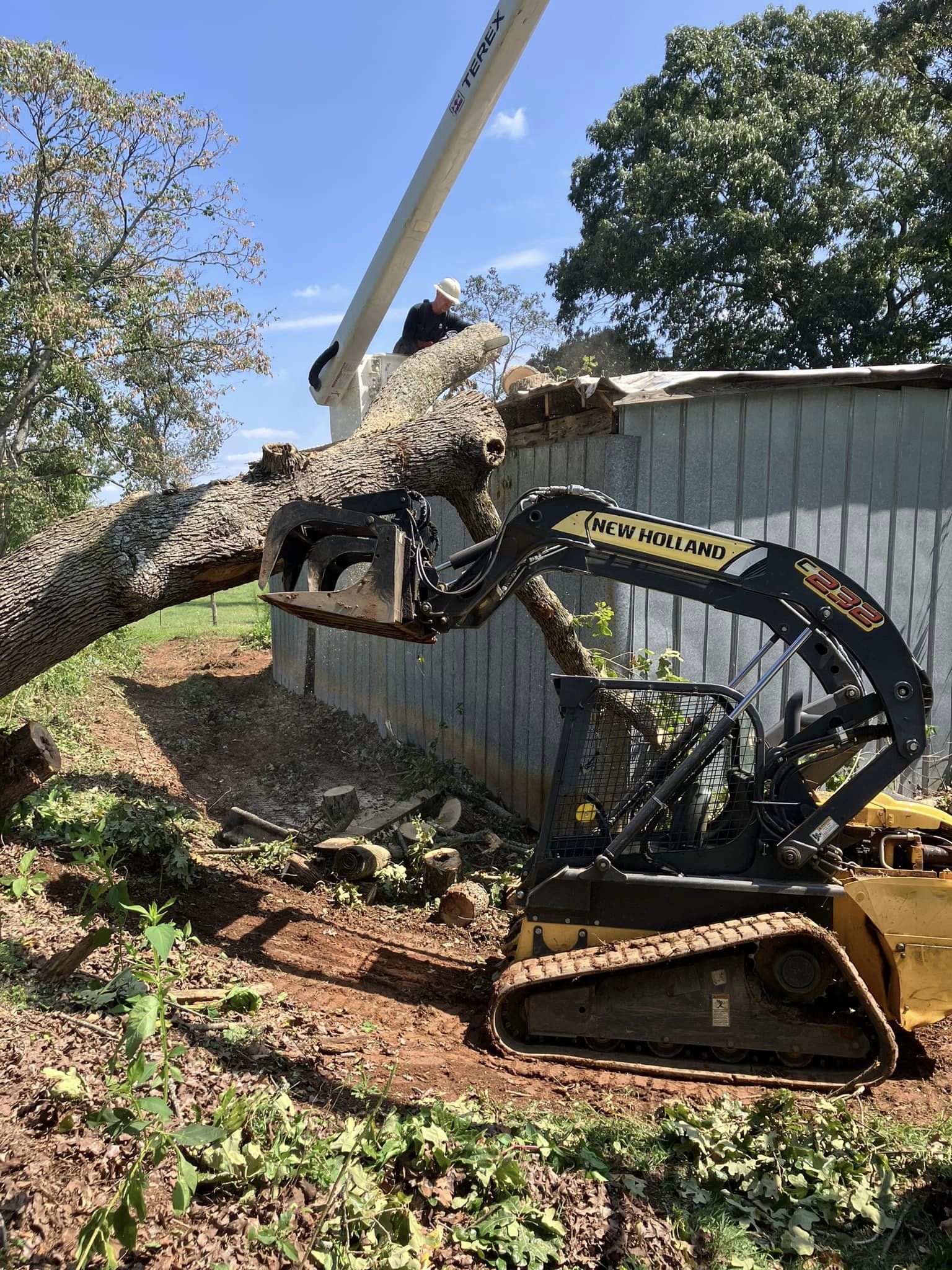
Hollar Brothers Tree Service on a call.
As warmer months return, tree experts urge property owners to look past the obvious; storm-stressed trees can carry hidden dangers well into the growing season.
HICKORY, NC, UNITED STATES, March 30, 2026 /EINPresswire.com/ -- The arrival of spring in the North Carolina foothills carries its usual promise: warming temperatures, budding trees, and longer days spent outdoors. But for homeowners across Alexander and Catawba counties, this particular spring arrives with a shadow that the season's greenery may soon hide — the structural aftermath of Hurricane Helene.When Helene swept through Western North Carolina in late September 2024, the storm delivered what the U.S. Forest Service described as moderate-to-catastrophic damage across more than 190,000 acres of land in the region. Both Alexander and Catawba counties were among the 27 counties included in the federal Major Disaster Declaration. The images of downed trees and cleared debris told one part of the story. The part that remains untold — and potentially more dangerous — is what stayed standing.
When 'Still Standing' Doesn't Mean 'Still Safe'
Trees that survived a major storm intact on the surface often carry damage that is invisible from the ground. Root systems can be partially uprooted and resettled, leaving a tree that looks healthy but has lost much of its anchoring foundation. Trunks and major limbs can develop internal cracks that don't reveal themselves until a second weather event — or simply until gravity and time take over.
According to NC State Extension, trees that have experienced significant storm stress may also become more vulnerable to secondary threats: pest infestation, fungal decay, and disease can take hold in wood that has been cracked, split, or weakened. These conditions develop gradually, which is precisely why spring — when trees are pushing new growth and changes are easier to observe — is the most important season for a professional assessment.
What Homeowners Should Be Looking For Right Now
Spring provides a valuable window for tree evaluation. As foliage begins to emerge, certain warning signs become more apparent — and others become easier to miss once the canopy fills in.
Professional arborists and tree care specialists recommend that property owners pay attention to the following before full leaf-out occurs:
- Branches that failed to leaf out. If a limb shows no signs of budding while surrounding branches are active, it is likely dead and poses a falling risk.
- Cracks or splits in the trunk or major limbs. Deep cracks extending into the heartwood are serious structural deficiencies, particularly in trees near homes, vehicles, or high-traffic areas.
- Leaning that wasn't there before. A tree that has shifted its angle since the storm may have experienced root damage or partial uprooting, even if the change appears subtle.
- Bark damage, fungal growth, or soft spots. These surface signs can indicate internal decay that compromises the structural integrity of the wood.
NC State Cooperative Extension advises that any situation requiring a ladder, chainsaw, or work near power lines should be handled by a trained professional. The risks of working on storm-stressed or structurally compromised trees without proper equipment are significant — and the consequences of misjudging a tree's condition can be severe.
The Case for Acting Before Summer Storm Season
North Carolina's storm season does not pause for recovery. The same region that absorbed Helene's impact in the fall will face another active season of severe thunderstorms, high winds, and potential tropical weather beginning in summer. Trees that were left structurally compromised by last year's storm carry a compounded risk: the next weather event does not need to be nearly as powerful to cause a failure.
Proactive pruning — removing dead, damaged, and weakened wood before it becomes a projectile — is one of the most effective steps a property owner can take to reduce storm-related loss. Tree care professionals note that a properly pruned canopy allows wind to pass through with less resistance, reducing the load on the tree's root system and trunk during high-wind events. Addressing structural issues now, while trees are beginning their growing season and wounds seal more effectively, is considerably less costly than emergency removal after a failure.
The Foothills Context: Local Knowledge Matters
The Western Foothills of North Carolina present a specific set of conditions that influence how trees respond to storm stress and how recovery should be approached. The region's mix of hardwoods — oaks, maples, tulip poplars, and hickories — each respond differently to mechanical damage, root disturbance, and seasonal stress.
What constitutes a recoverable injury in one species may represent a removal situation in another.
Local tree care professionals familiar with the specific species composition, soil conditions, and topography of Alexander and Catawba counties are better positioned to make accurate assessments than generalized guidelines alone can provide. For properties in or near areas that sustained direct Helene impact, that local familiarity is particularly valuable.
A Note on Timing: Spring Pruning Windows in NC
Not all pruning carries equal urgency, and timing matters. For most deciduous shade trees — the oaks, maples, and elms common to the Catawba Valley — late winter through early spring, before full bud break, is generally the optimal window for structural pruning. Trees are still dormant or just emerging, meaning sap loss is minimal, wound closure begins quickly with the onset of growth, and the structure of the canopy is still visible.
One important exception noted by NC State Extension and tree care professionals: oaks should not be pruned in spring, when the risk of oak wilt transmission is highest. For oak trees showing storm damage, scheduling an assessment now and planning removal or corrective work for late summer or fall is the recommended approach.
For trees with active hazards — hanging limbs, cracks over occupied areas, or visible structural failure — season is secondary to safety. Emergency removal and hazard pruning should be addressed without delay, regardless of time of year.
The landscape of Western North Carolina is defined, in large part, by its trees. They provide canopy, shade, wildlife habitat, property value, and the character of neighborhoods across the foothills. Caring for that landscape in the wake of a historic storm (and before the next season of weather arrives) is both a practical investment and a long-term commitment to the places where people live and work.
About Hollar Brothers Tree Service
Hollar Brothers Tree Service is a locally owned and operated tree care company proudly serving Alexander and Catawba counties from its home base in Hickory, North Carolina. With years of hands-on experience across residential, commercial, municipal, and institutional properties, the Hollar Brothers team offers comprehensive tree services including removal, pruning and trimming, stump grinding, hedgerow installation, and emergency storm response. Known throughout the Western Foothills for integrity, fair pricing, and owner-present service on every job, Hollar Brothers Tree Service is the trusted name in tree care across the region. Contact Hollar Brothers online for more info.
Houston Harris
FreshRobot
+1 828-324-1298
email us here
Legal Disclaimer:
EIN Presswire provides this news content "as is" without warranty of any kind. We do not accept any responsibility or liability for the accuracy, content, images, videos, licenses, completeness, legality, or reliability of the information contained in this article. If you have any complaints or copyright issues related to this article, kindly contact the author above.
