

Going Solar At Home? Here Is How A 1024Wh Solar Generator Kit Makes Clean Energy Simple For Any Household
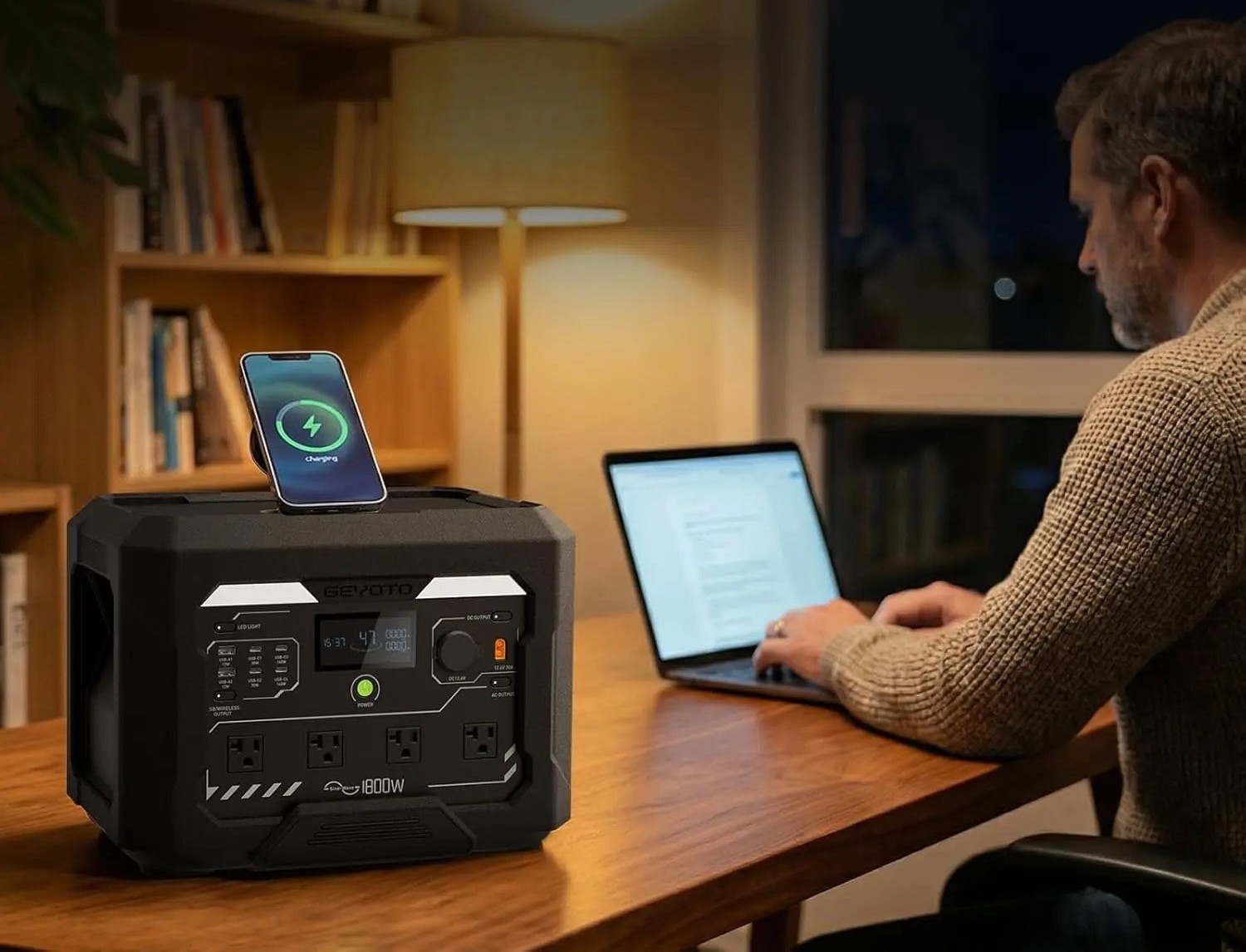
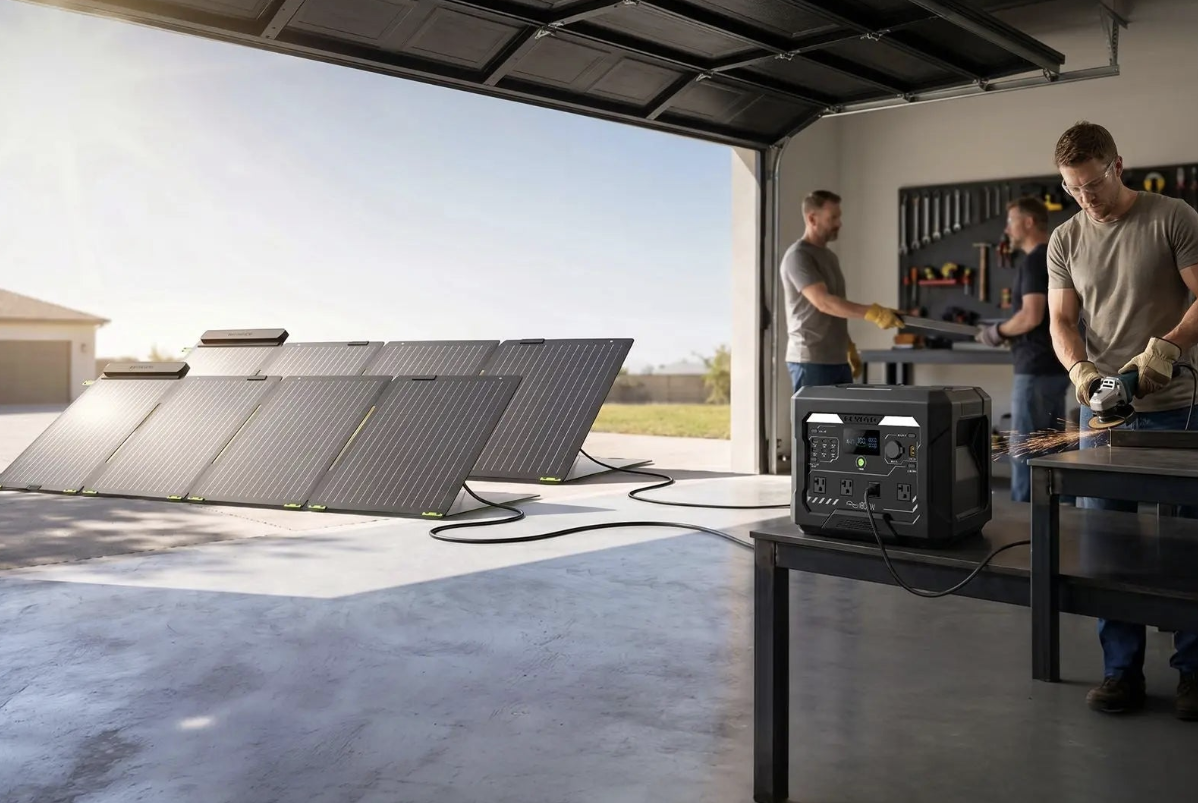
Still, the phrase "going solar at home" carries several meanings, and confusing them can lead to disappointment. This guide separates the versions of that phrase, then focuses on the most accessible one — a portable 1024Wh Solar Generator Kit — and walks through what such a kit realistically does, what it does not, and which households genuinely benefit. The goal is not to sell an idea of energy independence, but to help readers match the tool to the actual job.
What "Going Solar At Home" Actually Means Today
Three quite different scenarios often share the same label. The first is grid-tied rooftop solar: permanent panels, an inverter, and a utility interconnection agreement. The second is off-grid whole-home solar, common in remote cabins, which typically involves a large battery bank and professional installation. The third — and by far the most accessible — is a portable solar generator kit that plugs in out of the box, sits on a shelf until needed, and can also travel.
The distinction matters because the third category is not a smaller version of the first. It is a different product solving different problems. A portable kit will not replace a household's monthly utility bill, and it is not designed to run every appliance in the house through an extended outage. Instead, it addresses two problems that matter to most families: keeping essential devices running during unexpected power loss, and providing clean, quiet electricity away from wall outlets.
Translating 1024 Watt-Hours Into Real Household Runtime
Watt-hours are one of the least intuitive units in consumer electronics, which contributes to the gap between marketing pages and lived experience. A 1024Wh capacity roughly corresponds to running a 100-watt device for about 8 hours after accounting for efficiency losses. Translating that into everyday devices produces a clearer picture.
Reference runtimes depend on the connected device and operating conditions. GEYOTO's current N1000 page lists approximately 81.9 hours for a 10W LED light, 17.1 hours for a 48W Wi-Fi router, and 13.7 hours for a 60W mini fridge. Actual runtime varies with load, temperature, battery condition, and conversion losses.
The ceiling appears with high-wattage appliances. Electric kettles, hairdryers, and microwaves draw between 800 and 1500 watts and rely on resistive heating. The N1000 provides 1,800W of rated pure sine wave AC output with a 3,000W peak. Before connecting a high-draw appliance, check its running wattage, startup surge, plug type, and manufacturer instructions. Even when an appliance is compatible, high loads can shorten runtime substantially. Space heaters, electric ovens, and air conditioners fall firmly outside the practical range. Recognizing this ceiling upfront prevents the frustration that occurs when a kit purchased for the wrong scenario fails to meet expectations.
The Dual Identity That Sets Solar Generators Apart
What distinguishes a solar generator from the fuel-powered generator sitting in many garages is not raw power output — fuel units still win that category — but the combination of use cases a single device can cover.
Indoor blackout backup is the first role. Unlike a gasoline generator, a portable power station produces no combustion exhaust during normal operation. Use it only within the operating conditions, ventilation clearances, and load limits in the product manual. Fuel generators cannot, and carbon monoxide incidents during extended outages remain a documented public safety concern. Solar units are also designed for quieter operation than a combustion generator, which matters more than expected when an outage stretches into the night. There is no fuel to store, no engine oil to change, and no starter cord to pull at three in the morning. Units built with a fast-switching UPS function --- the N1000 switches to battery power in under 10 milliseconds when the grid drops --- may help compatible devices remain powered through a brief outage rather than rebooting after it. Check the switching tolerance of the specific device before relying on this for critical equipment. When paired with a solar panel, the kit refuels itself as daylight returns, which is the feature that separates it from a simple battery pack during multi-day disruptions.
Portable outdoor power is the second role. Camping trips, RV supplementary use, tailgating, outdoor events, and remote work from cabins all draw on the same hardware. A household that would otherwise consider two separate purchases — one backup device and one outdoor power source — often finds that a single well-sized solar generator kit covers both scenarios.
Honest comparison with fuel generators still matters. Fuel units deliver higher sustained wattage and lower cost per stored watt-hour at large scale, which suits extended off-grid living or heavy-draw job sites. Solar generators earn their place through indoor safety, silent operation, sunlight-based refueling, and near-zero routine maintenance. Neither is universally better; the fit depends on the scenario.
Matching Capacity To Household Reality
A useful decision framework separates households that benefit clearly from those better served by a different tool. Regions with occasional but real blackouts — storms, aging grid infrastructure, planned wildfire shutoffs — represent the strongest fit. Remote workers who cannot absorb internet or laptop downtime form another.
Households that want a non-medical backup for routers, LED lighting, laptops, cameras, or a mini fridge form another strong-fit group. Frequent outdoor users and those exploring solar as a first, reversible step without permits or roof modifications round out the primary audience.
Some scenarios reveal themselves as poor matches. Households needing to run central air conditioning, electric heating, or full-size refrigerators through extended outages face a capacity mismatch that no amount of clever loading resolves. Locations without reliable sunlight for panel recharge lose one of the kit's core advantages.
Users expecting whole-home replacement have simply landed on the wrong product category.
The honest takeaway sits at the center of these lists: matching capacity to real household need matters more than buying the largest battery on the market. An oversized purchase collects dust; a well-matched one earns its shelf space over years of use.
Where GEYOTO Fits Into This Category
Once the technical picture is clear, the question becomes which specific kit reflects that design thinking. GEYOTO (GEYOTO Technology Limited) develops portable solar power products aimed at exactly this dual-role scenario. The N1000 kit sits at the 1024Wh capacity point with an included 200W×2 dual-panel solar array (combined input up to 400W), positioning it for the blackout backup and outdoor power roles described above rather than for grid replacement.
Practical features reflect that positioning. Multiple output ports — AC, USB-C, USB-A, and a car port — cover the mix of household devices most people actually own, from routers and laptops to small appliances and phone-charging cables. One port stands out: a dedicated XT60 terminal delivering a 12.6V/30A jump-start output for compatible 12V lead-acid vehicle batteries. The jump-start cable is not included. Check vehicle and battery compatibility, use the specified cable, and follow the N1000 manual and vehicle manufacturer's safety instructions. The included 200W×2 panel array allows sunlight-based recharging fast enough to matter during multi-day outages, which is the specific scenario where battery-only power banks fall short. Weight and form factor keep the unit portable enough to move between a utility closet and a car trunk.
Documented household use cases, including workspace continuity during outages and outdoor power setups, appear on the household scenario reference, which offers concrete illustrations of how the kit fits into daily and emergency use rather than abstract specification lists. Compatibility with third-party devices depends on the wattage and input requirements of each specific piece of equipment, and checking those parameters against the kit's rated output remains the responsible step before connecting anything critical.
GEYOTO does not present the N1000 as the only kit on the market, nor as a solution for every household. It represents what a purpose-built 1024Wh unit looks like when designed around the two scenarios most households actually encounter — losing power unexpectedly, and needing electricity somewhere without an outlet. For readers evaluating that specific pair of problems, it offers a concrete starting point.
Clean energy at home does not have to begin with a rooftop and a five-figure invoice. Sometimes it begins with a portable box, a folding panel, and a clearer understanding of what the numbers on the label actually mean.
Website: https://www.geyoto.com/.
GEYOTO Technology Limited
GEYOTO Technology Limited
+1 213 292 9187
email us here
Legal Disclaimer:
EIN Presswire provides this news content "as is" without warranty of any kind. We do not accept any responsibility or liability for the accuracy, content, images, videos, licenses, completeness, legality, or reliability of the information contained in this article. If you have any complaints or copyright issues related to this article, kindly contact the author above.
