

Key Factors Buyers Should Consider When Choosing CNC Turning Services
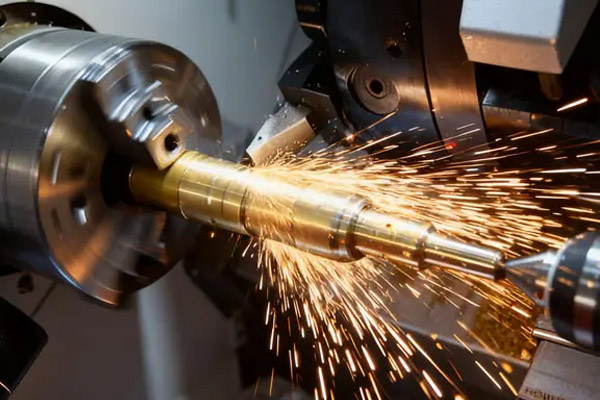
CNC turning is widely used to manufacture rotational components such as shafts, sleeves, flanges, and threaded fittings. When sourcing **CNC turning services**, buyers should look beyond unit prices and evaluate machine capabilities, material expertise, dimensional accuracy, surface finishing, and quality documentation. Overlooking these factors can lead to dimensional deviations, defective threads, surface defects, and delivery delays.
Yuanwenyu is an ISO 9001-certified in-house manufacturer based in Huizhou, providing **custom CNC turning services** for prototypes and small- to medium-batch production. This article outlines the key factors buyers should consider when selecting a CNC turning supplier.
## 1. CNC Turning Equipment and Capabilities
CNC turning involves rotating a workpiece while cutting tools remove material to create the required geometry. Different machine types serve different component sizes and production requirements.
### Conventional Slant-Bed CNC Lathes
Conventional slant-bed CNC lathes typically process chuck-held bar stock or forged blanks. They are suitable for discs, short shafts, flanges, and connectors, with common processing diameters of approximately 20–300 mm. These machines support prototype and small- to medium-batch production but are less efficient for tiny, slender pins that require repeated clamping.
### Swiss-Type Sliding-Head Lathes
Swiss-type lathes use a bar-feeding system and moving headstock, making them suitable for small-diameter, long, and slender components. They commonly process diameters of approximately 0.5–32 mm and are used for miniature sleeves, threaded pins, and precision shafts.
Their main limitation is the maximum bar diameter, which makes them unsuitable for large discs and oversized flanges.
### Mill-Turn Composite Lathes
Mill-turn composite lathes integrate live milling tools into a turning platform. They can produce slots, flats, and holes without repeatedly removing and repositioning the workpiece. This helps reduce secondary positioning and accumulated errors in complex components.
However, their machine-hour costs are generally higher, making them less economical for simple rotational parts.
In general, Swiss-type lathes are suitable for miniature slender components, conventional lathes are better for larger rotational parts, and mill-turn machines are useful for components combining turning and milling features.
### Length-to-Diameter Ratio
The length-to-diameter (L/D) ratio is an important indicator of machining difficulty. It is calculated by dividing the component's total length by its outer diameter.
An L/D ratio below 3 generally represents low-risk processing. Ratios between 3 and 8 may require tailstock support and optimized cutting parameters. Above 8, chatter and bending risks increase, requiring a validated process solution. When the ratio exceeds 12, a follower rest is generally necessary, and scrap probability increases.
Buyers should also confirm the supplier's stable operating range rather than relying only on advertised maximum machine dimensions.
## 2. Material and Bar-Stock Selection
Most turned components are manufactured from bar stock, while larger disc-shaped parts may require forgings or round billet blanks. Material grade, straightness, and surface condition can directly affect machining quality.
Common **CNC turning materials** include:
- **Aluminum:** 6061-T6 and 7075-T6 offer good machinability. Long shafts require controls to reduce distortion, while 7075 may accelerate tool wear.
- **Stainless steel:** Grades such as 304, 316L, and 17-4 PH can work-harden during machining. Cutting speed, feed rate, and coolant conditions require careful adjustment.
- **Titanium:** Ti-6Al-4V has poor thermal conductivity and a higher risk of built-up edge formation. Dedicated coolant strategies and conservative cutting speeds are important.
- **Copper and brass:** These materials generally offer good machinability and can achieve high-gloss finishes. Softer copper grades may deform under excessive clamping pressure.
- **Engineering plastics:** POM, PEEK, and PPSU can soften under heat. Reduced cutting speeds and sufficient air-blast cooling help prevent thermal warpage.
For aerospace- and medical-related projects, buyers should specify the required material grade and request Material Test Reports (MTRs). Industrial-grade materials cannot replace aerospace- or medical-specification bar stock.
Bar-stock straightness should also be inspected because bent material can cause run-out in finished shafts. For high-volume Swiss machining, automatic bar feeders can improve batch consistency. Buyers should clarify whether remnant bar-tail waste is included in the quotation.
## 3. Critical Geometric Features and Machining Risks
Thin walls, slender shafts, deep bores, and precision threads require particular attention during drawing evaluation and Design for Manufacturability (DFM) reviews.
### Thin-Wall Sleeves
Thin-wall sleeves and bushings may deform under chuck-clamping pressure and spring back after release. As a general reference, minimum wall thicknesses are approximately 0.8–1.0 mm for aluminum and 1.0–1.2 mm for stainless steel.
Common countermeasures include soft jaws, reduced clamping pressure, and incremental cutting. Extremely thin sections should be reviewed with the supplier to confirm manufacturability before production.
### Internal Bores
Small-diameter, deep bores are challenging because restricted chip evacuation can cause internal scratches, while long boring bars may generate chatter.
Smaller bore diameters and greater depths generally increase tolerance difficulty. Blind holes should provide sufficient chip-clearance space. Reaming or honing may be required to improve dimensional accuracy and surface finish.
### Precision Threads
Common thread-manufacturing methods include single-point threading, die threading, and tapping. Single-point turning provides controllable accuracy for standard metric external threads, while tapping is commonly used for miniature internal threads.
Buyers should specify thread accuracy grades, such as 6g or 6H, rather than providing only a designation such as M8. High-precision fine-pitch or non-standard threads may require dedicated tooling and go/no-go gauge inspection. Missing thread-grade information can result in inconsistent quotations and batch rejection.
### Surface Finish
Standard turning can generally achieve surface roughness values of approximately Ra 0.4–1.6 μm. Mirror-grade finishes require additional polishing.
Tool marks that are difficult to notice on untreated components may become more visible after anodizing or electroplating. Cosmetic requirements should therefore account for the complete **surface finishing for turned parts** process.
## 4. Tolerance and Batch Consistency
Buyers should distinguish between one-off sample accuracy and stable serial-production capability. Actual tolerances depend on geometry, material, machine configuration, and fixturing.
For general shafts with an L/D ratio below 5, standard tolerances commonly fall within ±0.03–0.05 mm, while precision-grade tolerances may reach ±0.01–0.02 mm.
Slender shafts with ratios between 5 and 10 commonly require standard tolerances of ±0.05–0.08 mm or precision tolerances of ±0.025–0.04 mm. Tailstock support is often necessary.
Disc and flange components commonly use standard tolerances of ±0.03–0.05 mm and precision tolerances of ±0.015–0.025 mm. Face run-out should receive particular attention.
For bushing inner bores, standard tolerances commonly range from ±0.03–0.05 mm, while precision-grade tolerances may reach ±0.01–0.02 mm. Reaming or honing can improve results.
Standard thread accuracy commonly uses 6H or 6g grades, while high-precision applications may require 4H or 4g grades.
Circularity, cylindricity, face run-out, and radial run-out can be as important as linear dimensions for rotational components. These geometric requirements should be clearly specified in engineering drawings.
Prototype orders may benefit from additional manual adjustments, but successful sample inspection does not guarantee consistent batch production. Small- and medium-batch manufacturing depends on repeatable fixturing, stable cutting parameters, and consistent bar feeding. Pilot runs are recommended before full-volume production.
## 5. Surface Finishing and Post-Processing
Many turned components require secondary finishing. Buyers should clarify whether finishing is performed in-house or by subcontractors and how quality is controlled.
Common processes include:
- **Aluminum:** Clear or colored anodizing and hard-coat anodizing. Coating thickness can affect dimensions, so precision threads may require masking or stock allowances.
- **Stainless steel and titanium:** Passivation and electropolishing.
- **Carbon steel:** Zinc plating, electroless nickel plating, and hard-chrome plating.
- **Copper:** Polishing, passivation, and nickel or gold plating.
- **Engineering plastics:** Sanding and polishing.
Thread and precision-bore masking requirements should be specified to prevent coating-induced dimensional changes or blocked threads.
## 6. Industry-Specific Applications
### Aerospace Components
Typical applications include R&D prototypes, ground-test tooling, sleeves, connectors, and bolts. Materials may include aerospace-grade aluminum, titanium, and superalloys. MTR traceability, First Article Inspection (FAI) reports, and dimensional inspection records may be required.
Yuanwenyu does not hold AS9100 certification. Its aerospace-related work is limited to non-flight-critical R&D and ground-testing applications.
### Medical-Related Components
Potential applications include medical-device prototypes, laboratory-instrument sleeves, surgical-tooling fixtures, and non-implant test samples. Materials may include 316L-VM, Ti-6Al-4V ELI, and PEEK-OPTIMA medical-grade bar stock.
Material traceability and cleaning or passivation documentation may be required. Yuanwenyu does not hold ISO 13485 accreditation and does not accept commercial human-implant finished components. Its medical-related work is limited to R&D test hardware and fixtures.
### Automation and New-Energy Equipment
Common turned components include sensor shafts, electrical connectors, motor shafts, and sealing sleeves. These parts may combine multiple threads, precision bores, strict run-out requirements, and demanding surface finishes. Production quantities are often small to medium batches.
## 7. CNC Turning Supplier Evaluation Checklist
Selecting a supplier requires more than comparing prices. Buyers should review the following areas:
1. **Machine inventory:** Confirm access to conventional CNC lathes, Swiss-type lathes, and mill-turn machines, along with their stable working ranges.
2. **Material expertise:** Check experience with the required **CNC turning materials**, particularly titanium, stainless steel, and engineering plastics.
3. **Process capability:** Ask how the supplier manages thin walls, slender shafts, deep bores, and fine-pitch threads.
4. **Fixtures and tooling:** Review the availability of soft jaws, tailstocks, follower rests, thread gauges, reamers, and honing tools.
5. **Inspection equipment:** Confirm access to micrometers, bore gauges, thread gauges, and run-out measurement tools.
6. **Finishing management:** Clarify how subcontracted anodizing, passivation, electroplating, and masking requirements are controlled.
7. **Documentation:** Confirm availability of MTRs, FAI reports, and dimensional inspection records.
8. **Certifications:** Check whether the supplier's actual certifications meet project requirements. ISO 9001 does not replace AS9100, IATF 16949, or ISO 13485 where those qualifications are required.
9. **Quotation transparency:** Request itemized costs for materials, setup, machine time, tooling, finishing, inspection, and bar-tail waste.
10. **DFM feedback:** Evaluate whether the supplier identifies drawing risks, including excessive L/D ratios, insufficient wall thickness, and missing thread specifications.
## 8. Preparing a Complete RFQ
A complete Request for Quotation (RFQ) helps suppliers evaluate manufacturability and provide accurate pricing.
The RFQ should include a GD&T-annotated 2D engineering drawing specifying diameters, lengths, geometric tolerances, run-out, thread grades, and Ra surface-finish requirements. STEP or IGS 3D CAD files should be provided as supplementary references.
Buyers should also identify the exact material grade, any aerospace- or medical-grade requirements, and whether MTR documentation is necessary. Batch quantities, estimated annual consumption, finishing requirements, masking details, required inspection documents, and target lead times should be clearly stated.
Submitting only 3D CAD files may support preliminary budget pricing, but it does not fully define acceptance criteria for serial production.
## 9. Yuanwenyu CNC Turning Services
Yuanwenyu is an ISO 9001-certified in-house manufacturer based in Huizhou. Its equipment includes slant-bed CNC lathes, Swiss-type sliding-head lathes, and mill-turn composite machines.
The company provides **custom CNC turning services** for rotational components and mixed-feature mill-turn parts. Its material-processing experience includes aluminum, stainless steel, titanium, copper, and engineering plastics such as PEEK and PPSU.
Before production, Yuanwenyu conducts DFM assessments focusing on L/D ratios, thin-wall sections, deep bores, and thread specifications. Inspection resources include micrometers, bore gauges, thread go/no-go gauges, and run-out measurement equipment.
The company also manages subcontract finishing services, including anodizing, passivation, electroplating, and relevant masking requirements. Available documentation can include MTRs, FAI reports, and dimensional inspection records for qualifying prototype projects.
**Qualification Disclaimer:** Yuanwenyu holds ISO 9001:2015 certification but does not hold AS9100 or ISO 13485 accreditation. Aerospace-related work is limited to non-flight-critical ground-use prototypes and tooling. Medical-related work is limited to R&D prototypes and test fixtures; finished implant-grade hardware is excluded.
For demanding high-accuracy applications, buyers can also review the company's **precision CNC turning solutions**.
## Frequently Asked Questions
**Q: Can suppliers guarantee tight tolerances for very slender shafts?**
Not in every case. High L/D ratios increase chatter and bending risks. For ratios above 8:1, buyers should confirm suitable tailstock or follower-rest solutions.
**Q: Can 3D CAD files replace 2D engineering drawings?**
3D files support preliminary quotations, but 2D drawings are necessary to define GD&T, run-out, thread grades, and surface-finish acceptance criteria.
**Q: Are Swiss-type lathes required for all miniature parts?**
No. They are preferred for small-diameter, high-volume slender components. Some small-quantity prototypes can be produced on conventional lathes, depending on geometry and cost.
**Q: What happens if a drawing specifies M8 without a thread grade?**
The supplier may assume a standard 6H or 6g thread. High-precision requirements such as 4H or 4g should be stated explicitly to avoid inspection failures.
**Q: Does anodizing affect thread dimensions?**
Yes. Coating thickness can reduce thread clearance. Precision threads may require masking or pre-coating allowances.
**Q: Do approved prototypes guarantee consistent batch quality?**
No. Serial production depends on repeatable fixturing, bar feeding, and stable cutting parameters. Pilot validation is recommended.
**Q: Are all finishing operations performed in-house?**
Yuanwenyu performs CNC turning internally. Anodizing, passivation, electroplating, and painting are handled by subcontractors, with specifications managed and incoming inspections conducted after finishing.
**Q: Is there a minimum order quantity?**
Yuanwenyu does not enforce an MOQ and accepts one-off prototypes, although small orders may have higher setup and tooling costs per unit.
## Request Your Quotation
Submit STEP or IGS models together with 2D engineering drawings. Include material grades, GD&T tolerances, thread specifications, finishing requirements, batch quantities, required documentation, and target lead times.
Yuanwenyu provides itemized quotations and DFM feedback within 24 working hours.
Yuanwenyu — Your Trusted Partner for [Custom CNC Turning Services](https://www.ywy-cnctechnology.com/cnc-turning/).
Huizhou City Yuan Wenyu Precision Parts Co., Ltd.
Huizhou City Yuan Wenyu Precision Parts Co., Ltd.
+ +86-13928348837
Legal Disclaimer:
EIN Presswire provides this news content "as is" without warranty of any kind. We do not accept any responsibility or liability for the accuracy, content, images, videos, licenses, completeness, legality, or reliability of the information contained in this article. If you have any complaints or copyright issues related to this article, kindly contact the author above.
